
2025: The Year AI Went Mainstream - A Complete Year In Review
In 2025, artificial intelligence stopped being a novelty and became infrastructure. This year-in-review examines how AI moved from experimentation to normalization—analyzing investment shifts, enterprise adoption, regulatory changes, and what this transition means for organizations navigating AI's maturation from hype to practical integration.
2025: The Year AI Went Mainstream
A Complete Year in Review
In 2025, artificial intelligence stopped being a novelty and became infrastructure. What had once lived in demos, pilot projects, and speculative headlines quietly embedded itself into everyday business operations, public policy discussions, and personal workflows. AI did not "take over" the world. It settled into it.
This year marked the transition from experimentation to normalization. The story of AI in 2025 is not about breakthroughs alone—it is about adoption, correction, and integration.
From Experiment to Infrastructure

For much of the early 2020s, artificial intelligence was treated as a promising but uncertain technology. Companies experimented with chatbots, recommendation engines, and automation tools, often without a clear plan for long-term integration.
In 2025, that changed. AI systems increasingly moved behind the scenes, supporting tasks like customer service routing, software development assistance, document analysis, logistics planning, and fraud detection. Rather than replacing entire roles, AI began augmenting existing ones.
The Investment Shift That Changed Everything

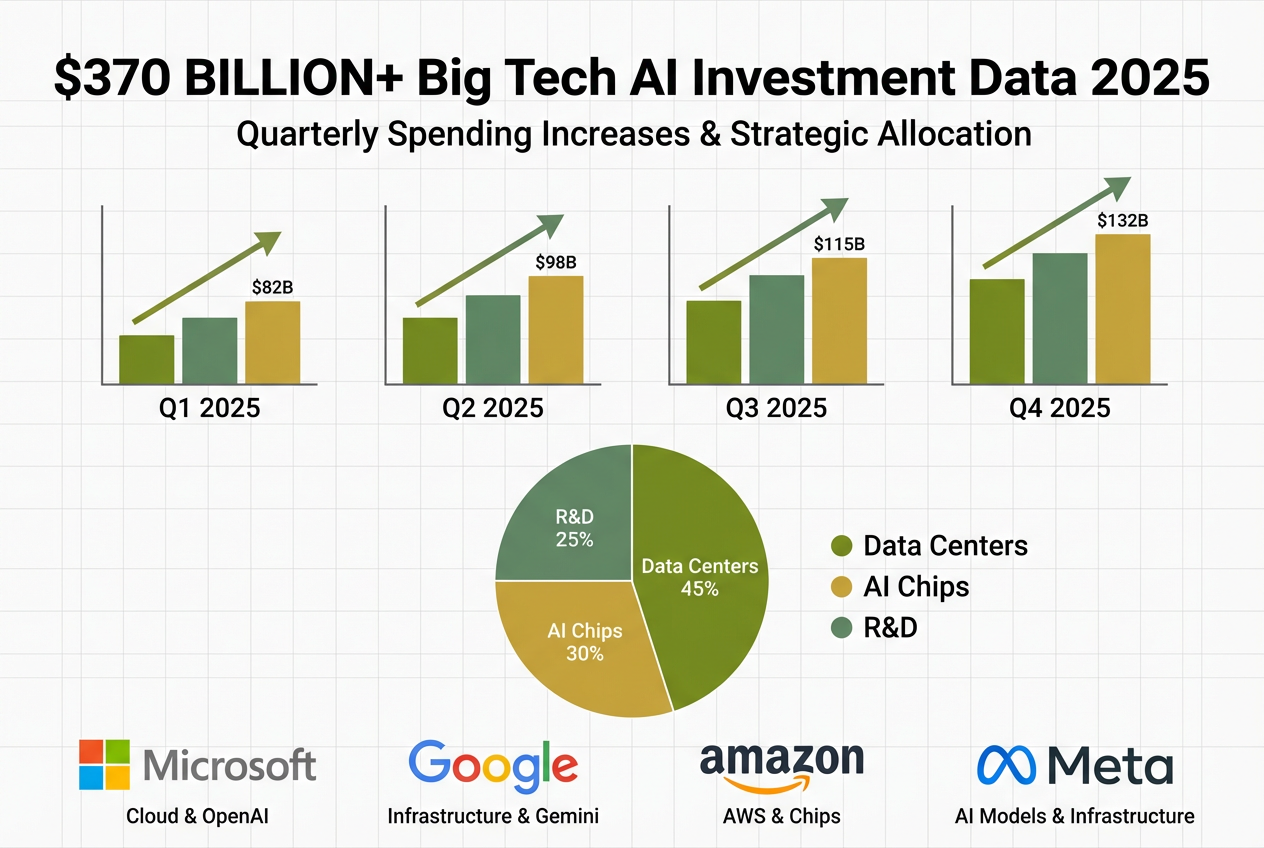
One of the defining features of 2025 was where the money went. Instead of focusing solely on applications, investment shifted toward infrastructure: data centers, specialized hardware, cloud capacity, and enterprise-scale AI models.
Industry year-in-review analyses documented a dramatic rise in enterprise AI infrastructure spending, signaling that organizations were no longer experimenting but committing long term (AI With Allie, 2025).
This wasn't speculative spending. It reflected a recognition that AI was becoming a baseline requirement for competitiveness.
Enterprise Adoption Becomes the Norm

By the end of 2025, AI use inside organizations extended well beyond innovation teams. Marketing, legal, finance, operations, and software development teams integrated AI into everyday workflows.
Enterprise adoption data showed that AI usage was widespread, even as many organizations struggled to extract immediate financial returns (Champaign Magazine, 2025).
What changed was not universal success, but persistence. Organizations learned that AI value depended less on the technology itself and more on process redesign and organizational readiness.
Regulation and the Reality Check

As AI became embedded in daily operations, regulatory attention intensified. Governments shifted from speculative risk discussions to practical governance: transparency, accountability, and data usage.
Rather than slowing adoption, clearer regulatory frameworks reduced uncertainty and allowed risk-averse organizations to deploy AI more confidently (Qudata, 2025).
Public Perception vs. Practical Use

Public conversations around AI remained polarized throughout 2025, ranging from fears of mass job displacement to exaggerated claims of superintelligence.
In practice, most people encountered AI as a helpful but imperfect tool: drafting emails, summarizing documents, assisting with research, and automating routine tasks.
As with earlier technological shifts, familiarity softened both fear and fascination. AI became less impressive—and more useful.
What 2025 Actually Changed

Looking back, 2025 did not deliver a single defining breakthrough. Instead, it marked a collective adjustment.
Organizations learned that AI amplifies existing strengths and weaknesses. Strong processes improved. Weak ones became painfully visible.
The central question shifted from "What can AI do?" to "Where does AI genuinely help?"
Looking Ahead: AI After the Hype
As AI moves beyond its hype phase, progress will be measured less by model size and more by reliability, trust, and integration.
If 2025 was the year AI went mainstream, the years ahead will determine what kind of mainstream technology it becomes.
Sources & References
- AI With Allie. The Entire 2025 AI Year in Review. https://aiwithallie.beehiiv.com/p/the-entire-2025-ai-year-in-review
- Champaign Magazine. 2025 AI Year in Review: Enterprise Adoption & Infrastructure. https://champaignmagazine.com/2025/12/29/2025-ai-year-in-review-report-1-2/
- Qudata. AI Year in Review 2025: Regulation, Adoption, and Reality. https://qudata.com/en/news/news-digest-2025-ai-year-review/
Published by Vintage Voice News
Sources & References
Disclaimer: This analysis is for informational purposes only and does not constitute investment advice. Markets and competitive dynamics can change rapidly in the technology sector. Taggart is not a licensed financial advisor and does not claim to provide professional financial guidance. Readers should conduct their own research and consult with qualified financial professionals before making investment decisions.

Taggart Buie
Writer, Analyst, and Researcher